
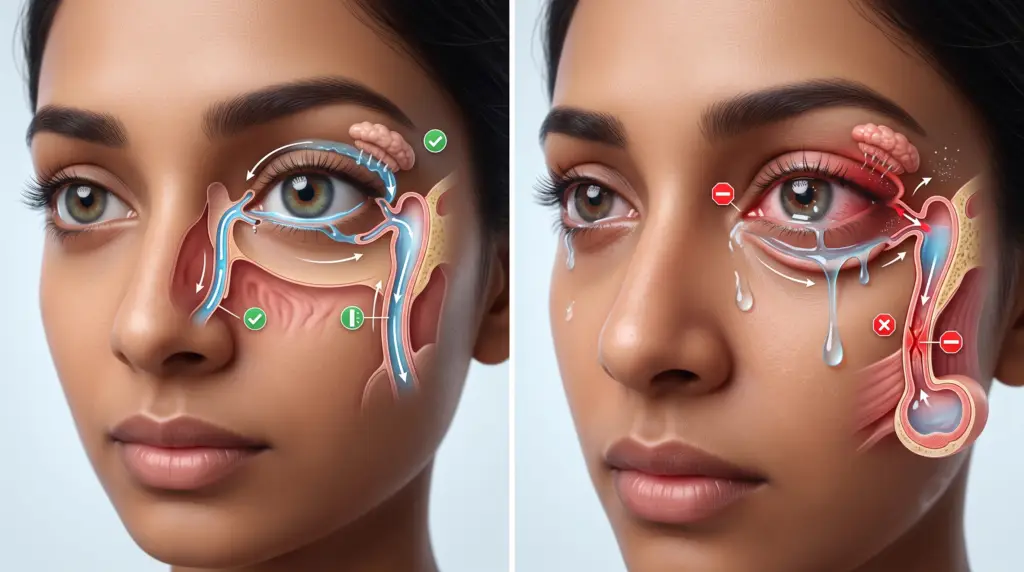
Watery Eyes Treatment depends on the underlying reason behind frequent or excessive tearing. Understanding common Watery Eyes Causes and recognising Watery Eyes Symptoms can help identify eye problems early. While Excessive Eye Watering may occur due to irritation, allergies, or blocked tear ducts, proper Tearing Eyes Treatment can help relieve discomfort and protect your eye health.
Watery eyes can be uncomfortable and frustrating. Tears may constantly fill the eyes or even flow down the cheeks without crying.
In many cases, watery eyes occur because of irritation, allergies, or dry eyes. However, excessive tearing may sometimes indicate an eye or tear drainage problem.
Therefore, understanding the possible causes can help you find the right treatment and protect your eye health.
What Are Watery Eyes?
Watery eyes occur when the eyes produce too many tears or when tears do not drain properly.
The condition is also known as excessive tearing or epiphora.
People with watery eyes may notice:
- Constant tearing
- Tears flowing down the cheeks
- Blurry vision
- Eye irritation
- Redness
- Burning sensation
- Sticky eye discharge
Moreover, symptoms may affect one eye or both eyes.
Why Are Tears Important for Eye Health?
Tears play an important role in keeping the eyes healthy and comfortable.
They help:
- Keep the eye surface moist
- Protect the eyes from dust
- Remove small particles
- Support clear vision
- Reduce eye irritation
Every time you blink, tears spread across the surface of the eye.
Therefore, a healthy tear film is important for comfortable and clear vision.
What Causes Watery Eyes?
Several conditions can cause excessive tearing.
Common causes include:
- Dry eyes
- Eye allergies
- Dust or smoke exposure
- Eye infections
- Blocked tear ducts
- Eyelid inflammation
- Foreign objects in the eye
- Contact lens irritation
- Weather changes
Additionally, ageing and certain eye conditions may affect normal tear drainage.
Can Dry Eyes Cause Excessive Tearing?
Yes. Surprisingly, dry eyes can sometimes make the eyes water more.
When the eye surface becomes dry or irritated, the eyes may produce extra tears as a protective response.
People with dry eyes may also experience:
- Burning
- Gritty sensation
- Eye fatigue
- Redness
- Blurry vision
- Sensitivity to light
Therefore, frequent watery eyes may sometimes be linked to dry eye problems.
Can Eye Allergies Make Your Eyes Water?
Yes. Eye allergies are a common cause of watery and itchy eyes.
Common allergens include:
- Dust
- Pollen
- Pet dander
- Mould
- Smoke
- Certain cosmetic products
As a result, the eyes may become red, itchy, swollen, and watery.
Moreover, rubbing the eyes can make irritation worse.
Can a Blocked Tear Duct Cause Watery Eyes?
Tears normally drain through small tear ducts near the inner corners of the eyes.
However, if a tear duct becomes blocked, tears may not drain properly.
Consequently, tears can build up and flow down the cheeks.
Possible symptoms include:
- Constant watering
- Sticky discharge
- Swelling near the inner eye
- Eye irritation
- Repeated eye infections
Therefore, persistent watering in one eye should be evaluated by an eye specialist.
Can Eye Infections Cause Excessive Tearing?
Yes. Eye infections such as conjunctivitis may cause watery eyes.
Other symptoms may include:
- Eye redness
- Sticky discharge
- Swollen eyelids
- Burning sensation
- Eye discomfort
- Crusting around the eyelids
Additionally, some eye infections can spread easily.
Therefore, proper diagnosis and treatment are important.
Who Is More at Risk of Watery Eyes?
Although anyone can develop watery eyes, some people may be more susceptible.
Higher-risk groups include:
- Older adults
- People with eye allergies
- Contact lens users
- Individuals with dry eyes
- People exposed to dust or smoke
- Individuals with eyelid problems
- People with blocked tear ducts
Moreover, recurring eye infections may increase eye irritation and tearing.

Can Contact Lenses Cause Watery Eyes?
Yes. Contact lenses may irritate the eyes if they are used incorrectly.
Common contact lens problems include:
- Wearing lenses for too long
- Sleeping with contact lenses
- Poor lens hygiene
- Using expired lenses
- Wearing damaged lenses
As a result, the eyes may become watery, red, and uncomfortable.
Therefore, proper contact lens hygiene is essential for healthy eyes.
Can Weather Changes Affect Watery Eyes?
Yes. Weather and environmental conditions can affect tear production.
Cold wind, strong sunlight, smoke, and dust may irritate the eyes.
Additionally, air conditioners and dry indoor environments may worsen dry eye symptoms.
Consequently, the eyes may produce more tears in response to irritation.
What Symptoms May Occur With Watery Eyes?
Watery eyes may occur with other symptoms depending on the underlying cause.
Common symptoms include:
- Eye redness
- Itching
- Burning sensation
- Blurry vision
- Swollen eyelids
- Eye pain
- Sticky discharge
- Sensitivity to light
Therefore, paying attention to additional symptoms can help identify the possible cause.
Warning Signs You Should Not Ignore
Occasional watery eyes are often harmless. However, certain symptoms require medical attention.
You should not ignore:
- Severe eye pain
- Sudden vision changes
- Persistent blurry vision
- Severe sensitivity to light
- Eye injury
- Significant swelling
- Thick eye discharge
- Constant watering in one eye
Prompt eye evaluation can help identify the cause and prevent complications.
How Are Watery Eyes Diagnosed?
An eye specialist may perform a detailed eye examination to find the cause of excessive tearing.
The examination may include:
- Vision testing
- Eyelid examination
- Tear film evaluation
- Slit-lamp examination
- Tear drainage assessment
- Eye surface examination
Additionally, further tests may be recommended if a blocked tear duct is suspected.
What Are the Treatment Options for Watery Eyes?
Treatment depends on the underlying cause.
Possible treatment options may include:
- Lubricating eye drops
- Allergy treatment
- Medicines for eye infections
- Eyelid hygiene
- Contact lens care
- Removal of a foreign object
- Treatment for blocked tear ducts
In some cases, a procedure may be needed to improve tear drainage.
Therefore, proper diagnosis is important before starting treatment.
Can You Prevent Watery Eyes?
Although not every cause can be prevented, simple eye care habits may reduce irritation.
Helpful measures include:
- Avoid rubbing your eyes.
- Protect your eyes from dust and smoke.
- Follow proper contact lens hygiene.
- Take regular screen breaks.
- Keep your eyelids clean.
- Avoid known allergens when possible.
- Use prescribed eye drops correctly.
- Schedule regular eye examinations.
Moreover, early treatment of eye problems may prevent symptoms from becoming worse.
How Can Watery Eyes Affect Daily Life?
Constant tearing can interfere with everyday activities.
People may experience:
- Difficulty reading
- Blurry vision
- Trouble using digital screens
- Frequent wiping of the eyes
- Skin irritation around the eyes
- Difficulty driving
Additionally, watery eyes may affect concentration and visual comfort.
Therefore, persistent symptoms should not be ignored.
When Should You Visit an Eye Specialist?
You should consult an eye specialist if:
- Your eyes water constantly.
- Symptoms continue for several days.
- One eye waters repeatedly.
- Vision becomes blurry.
- Eye pain develops.
- There is swelling or discharge.
- Symptoms affect your daily activities.
Early diagnosis can help identify the underlying cause and provide suitable treatment.
Tips for Healthy and Comfortable Eyes
Simple daily habits can support better eye health.
Helpful tips include:
- Wash your hands before touching your eyes.
- Avoid frequent eye rubbing.
- Stay away from smoke and dust.
- Use clean contact lenses.
- Take breaks during screen use.
- Follow proper eyelid hygiene.
- Attend regular eye check-ups.
Consistency in these habits can help maintain comfortable and healthy eyes.
Final Thoughts
Watery eyes may be caused by dry eyes, allergies, irritation, eye infections, or blocked tear ducts. Although occasional tearing is often temporary, persistent or severe symptoms should not be ignored.
Fortunately, proper diagnosis and timely treatment can help relieve excessive tearing and protect your eye health.
📍 Contact Sunayan Eye Care
If you are experiencing persistent watery eyes, eye irritation, redness, blurry vision, or excessive tearing, our eye specialists are here to help.
📞 Phone:
+91 6646230636
+91 9040030636
📧 Email: sunayaneyecare@yahoo.co.in
📍 Address:
Sunayan Marg, Satyabati Enclave,
Behind State Bank of India
Healthy tear balance supports clear, comfortable vision and better eye health every day.
