
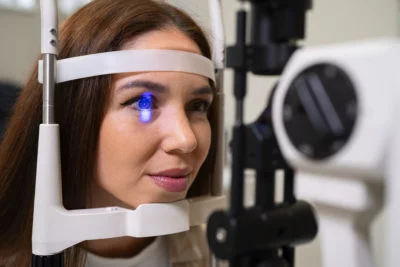
In the era of digital dominance, our lives are increasingly intertwined with screens emitting blue light, be it from computers, smartphones, or other electronic devices. While the convenience of these technologies is undeniable, there’s a growing concern about the potential impact of prolonged blue light exposure on eye health, particularly in relation to cataract development.
In this blog, we’ll delve into the connection between blue light and cataracts, exploring preventive measures for computer users, understanding the role of sleep, and examining the risks associated with a sedentary lifestyle.
The Impact of Blue Light on Cataract Development
- Cataracts: Clouding of the eye’s natural lens.
- Blue light’s short wavelength and high energy penetrate the eye deeply.
- Prolonged exposure leads to oxidative stress and damage to lens proteins.
- Potential acceleration of cataract formation.
Cataract Prevention for Computer Users
- Adoption of preventive measures crucial for computer users.
- Investment in blue light filtering glasses or screen protectors.
- Regular breaks and the 20-20-20 rule (looking at something 20 feet away for 20 seconds every 20 minutes).
- Adjustment of screen brightness to minimise blue light impact.
What is The Connection Between Sleep and Cataract Prevention?
- Sleep’s pivotal role in eye health and cataract prevention.
- Adequate, quality sleep facilitates eye repair and regeneration.
- Disruptions to the circadian rhythm, induced by excessive blue light exposure, interfere with natural repair processes.
- Prioritising good sleep hygiene positively impacts cataract prevention.
Cataract Risk in Individuals with a Sedentary Lifestyle
- Sedentary lifestyle is linked to increased risk of various health issues, including cataracts.
- Regular physical activity enhances blood circulation and delivers essential nutrients to the eyes.
- Exercise helps manage oxidative stress, reducing the risk of cataracts.
- Simple activities like walking, jogging, or yoga are effective for those with a sedentary lifestyle.
Proactive measures essential for maintaining eye health in the digital age.
Reduction of blue light exposure, prioritising good sleep, and incorporating physical activity collectively contribute to cataract prevention.
