
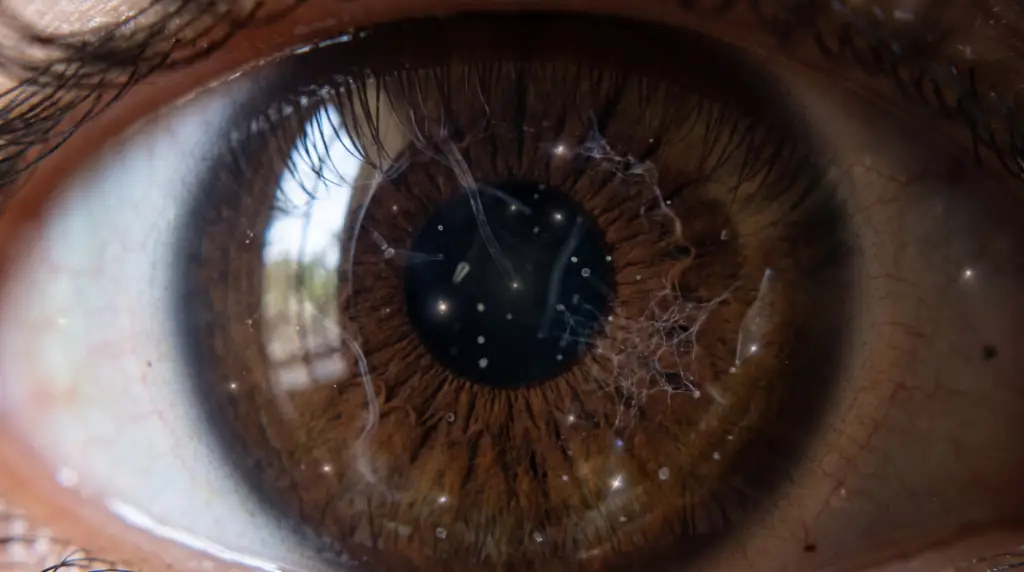
Eye Floaters and Flashes are common vision changes that may appear as tiny spots, lines, or flashing lights in your eyesight. While some eye floaters causes are linked to normal changes in the eye, sudden eye floaters or flashes in vision may sometimes indicate serious problems such as retinal tear symptoms. Knowing when these changes need medical attention can help protect your vision and prevent possible complications.
Understanding Eye Floaters and Flashes is important because different Eye Floaters Causes may affect your vision in different ways. While occasional Flashes in Vision may occur due to changes inside the eye, Sudden Eye Floaters can sometimes appear alongside Retinal Tear Symptoms and should not be ignored.
Seeing small dots, lines, or flashes of light in your vision can feel unusual. Although eye floaters and flashes are often harmless, sudden changes may sometimes indicate a serious eye problem.
In many cases, floaters develop because of natural changes inside the eye. However, a sudden increase in floaters or flashes should not be ignored.
Therefore, understanding these symptoms can help protect your eyesight and prevent serious vision problems.
What Are Eye Floaters?
Eye floaters are small shapes that appear to move across your field of vision.
They may look like:
- Small black dots
- Tiny spots
- Squiggly lines
- Cobweb-like shapes
- Threads or strands
- Small shadows
Moreover, floaters often move when you move your eyes. They may also seem to drift away when you try to look directly at them.
Why Do Eye Floaters Occur?
The inside of the eye contains a clear, jelly-like substance called the vitreous.
As people grow older, the vitreous naturally changes and may become more liquid. As a result, tiny fibres or clumps can cast shadows on the retina and appear as floaters.
Common causes of eye floaters include:
- Age-related eye changes
- Posterior vitreous detachment
- Eye inflammation
- Eye injury
- Previous eye surgery
- Certain retinal problems
Therefore, new or changing floaters should be carefully monitored.
What Are Eye Flashes?
Eye flashes appear as brief bursts or streaks of light in your vision.
People may describe them as:
- Lightning-like streaks
- Camera flashes
- Flickering lights
- Sparkles
- Bright spots
Flashes may occur when the vitreous pulls or rubs against the retina.
Although occasional flashes may have different causes, sudden or repeated flashes require an eye examination.
Are Eye Floaters and Flashes Normal?
In many people, occasional floaters are harmless, especially when they have been present for a long time and do not affect vision.
Additionally, floaters may become less noticeable over time.
However, sudden changes are more concerning.
You should pay attention if:
- New floaters suddenly appear
- The number of floaters increases quickly
- Flashes of light begin suddenly
- Vision becomes blurry
- A dark shadow appears in your vision
Consequently, early eye evaluation is important when symptoms change unexpectedly.
Who Is More Likely to Develop Eye Floaters?
Although anyone can experience floaters, certain people may have a higher risk.
Higher-risk groups include:
- Older adults
- People who are very short-sighted
- Individuals with previous eye injuries
- People who have undergone eye surgery
- Patients with retinal problems
- Individuals with inflammation inside the eye
Moreover, natural ageing can increase changes in the vitreous.

When Can Floaters and Flashes Be Serious?
Sometimes, sudden floaters and flashes may be linked to a retinal tear or retinal detachment.
The retina is the light-sensitive layer at the back of the eye. If it becomes torn or detached, vision may be seriously affected.
Warning signs may include:
- A sudden shower of new floaters
- Frequent flashes of light
- A dark curtain across the vision
- A shadow in the field of vision
- Sudden blurred vision
- Loss of side vision
Therefore, these symptoms require urgent evaluation by an eye specialist.
What Is Retinal Detachment?
Retinal detachment occurs when the retina separates from its normal position at the back of the eye.
This is a serious eye condition because the retina plays an important role in vision.
If treatment is delayed, permanent vision loss may occur.
Fortunately, early diagnosis and timely treatment can help protect vision.
Can Eye Injury Cause Floaters and Flashes?
Yes. An eye injury may affect the vitreous or retina and lead to sudden visual changes.
After an eye injury, a person may notice:
- New floaters
- Flashes of light
- Blurred vision
- Eye discomfort
- Changes in peripheral vision
Therefore, sudden vision symptoms after an eye injury should be checked by an eye doctor.
How Are Eye Floaters and Flashes Diagnosed?
An eye specialist may perform a detailed eye examination to identify the cause of floaters and flashes.
The examination may include:
- Vision testing
- Dilated eye examination
- Retina examination
- Vitreous evaluation
- Eye pressure testing when required
Additionally, further tests may be recommended depending on the patient’s symptoms and eye condition.
Do Eye Floaters Need Treatment?
Most harmless eye floaters do not require treatment.
Over time, the brain may become less aware of them. Therefore, floaters may gradually become less noticeable.
However, treatment depends on the underlying cause.
If a retinal tear, inflammation, or another eye condition is detected, appropriate treatment may be required.
Consequently, an accurate diagnosis is important before deciding on treatment.
When Should You See an Eye Doctor?
You should visit an eye doctor if:
- Floaters appear suddenly.
- The number of floaters increases quickly.
- You experience repeated flashes of light.
- A dark curtain or shadow appears.
- Your vision suddenly becomes blurry.
- You notice loss of side vision.
- Symptoms begin after an eye injury or eye surgery.
Sudden new floaters, flashes, blurred vision, or a curtain-like shadow can be warning signs of a serious retinal problem and need urgent eye assessment.
How Can Floaters and Flashes Affect Daily Life?
Eye floaters may sometimes interfere with daily visual activities.
People may experience:
- Difficulty reading
- Distraction while using screens
- Trouble focusing on bright backgrounds
- Visual discomfort outdoors
- Difficulty noticing fine details
Moreover, frequent flashes may cause concern and affect visual comfort.
Therefore, identifying the cause can provide reassurance and support proper eye care.
Tips for Protecting Your Retina and Eye Health
Simple eye care habits can support long-term vision health.
Helpful tips include:
- Schedule regular eye examinations.
- Protect your eyes from injuries.
- Manage diabetes and other health conditions.
- Report sudden vision changes immediately.
- Avoid ignoring new floaters or flashes.
- Follow your eye doctor’s treatment advice.
Additionally, people with existing retinal problems should attend regular follow-up examinations.
Final Thoughts
Eye floaters and flashes are often linked to natural changes inside the eye. However, sudden new floaters, repeated flashes, blurred vision, or a dark curtain across the vision should never be ignored.
Fortunately, timely eye examinations can help detect retinal problems early and protect your eyesight.
📍 Contact Sunayan Eye Care
If you are experiencing sudden eye floaters, flashes of light, blurred vision, or unusual changes in your eyesight, our eye specialists are here to help.
📞 Phone:
+91 6646230636
+91 9040030636
📧 Email: sunayaneyecare@yahoo.co.in
📍 Address:
Sunayan Marg, Satyabati Enclave,
Behind State Bank of India
Early attention to sudden vision changes can help protect your eyesight and maintain healthy vision.
